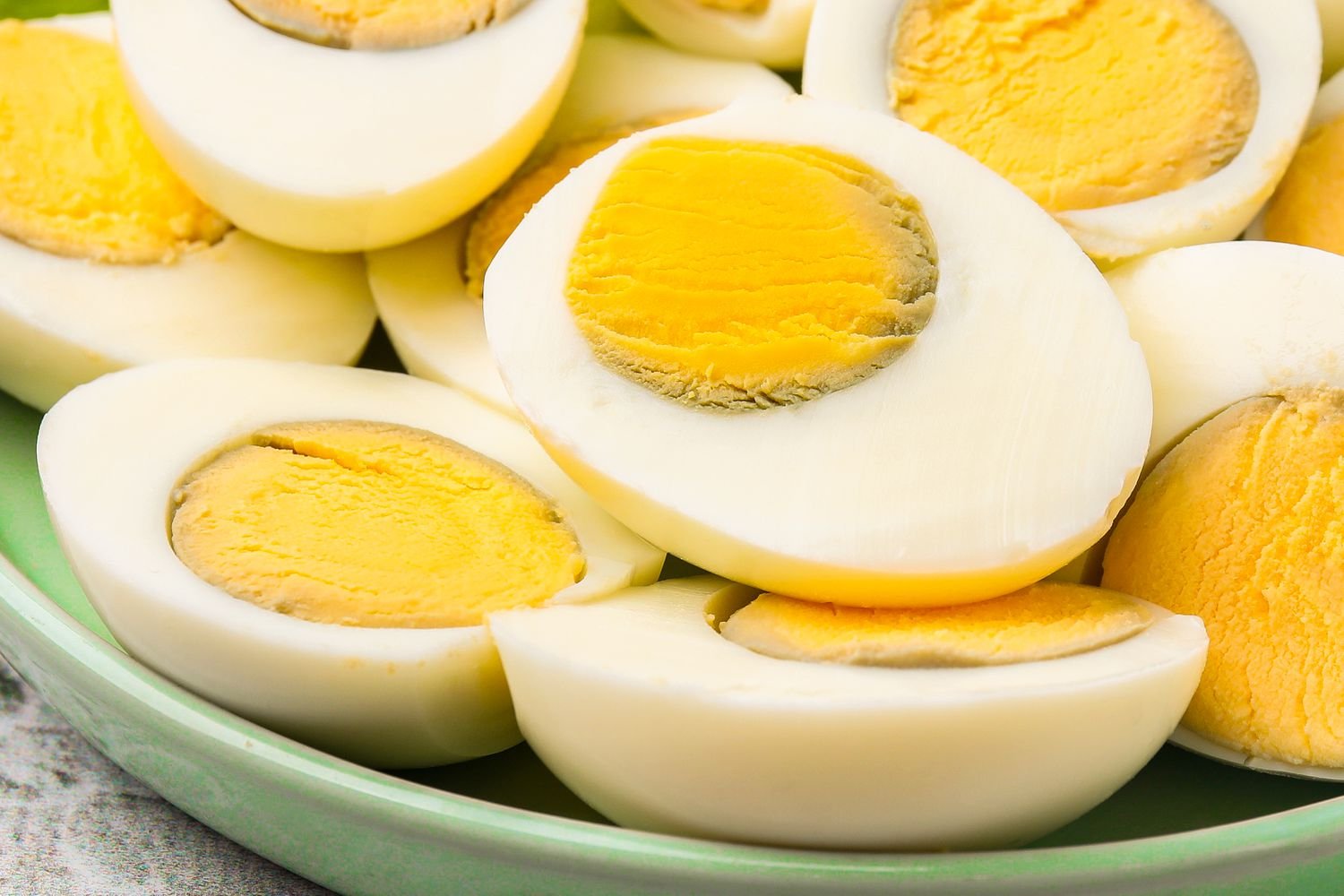
Seeing a green or gray ring around the yolk of your hard-boiled egg can look alarming—but in most cases, it’s totally harmless. It doesn’t mean the egg is rotten, and it’s not mold. It’s simply a common reaction that happens when eggs are cooked a certain way. In this article, you’ll learn why it happens, whether it’s safe to eat, and the best tricks to prevent it every time.
What Causes the Green Ring?
The green/gray ring forms because of a chemical reaction between two natural components in the egg:
-
Sulfur in the egg white
-
Iron in the egg yolk
When eggs are cooked too long or at too high heat, sulfur in the white turns into hydrogen sulfide gas. That gas can react with the iron in the yolk, creating iron sulfide—the compound responsible for the greenish ring.
Is It Safe to Eat?
Yes—it’s safe in normal situations.
A green ring usually means the egg was overcooked, not spoiled. The egg might taste a little stronger and the yolk texture can be drier or crumbly, but it’s generally fine to eat.
Important: If the egg smells bad (strong rotten smell), feels slimy, or has unusual discoloration outside the ring, throw it away.
Does the Green Ring Mean the Egg Is Old?
Not necessarily. Older eggs can make the issue slightly more likely (the pH of the white changes over time), but the main cause is almost always overcooking or overheating.
Why Overcooking Happens So Easily
Hard-boiled eggs are small, so they heat up fast. Leaving eggs in boiling water for too long, or cooling them slowly, gives sulfur and iron more time to react. The result: that green ring.
How to Prevent the Green Ring (Best Method)
Try this simple method for perfect hard-boiled eggs:
Step 1: Start with cold water
Place eggs in a pot and cover with cold water (about 2–3 cm / 1 inch above the eggs).
Step 2: Heat to a gentle boil
Bring to a boil over medium-high heat.
Step 3: Turn off the heat
As soon as the water reaches a boil, turn off the heat, cover the pot, and let eggs sit:
-
9–10 minutes for firm yolks
-
7–8 minutes for slightly creamy yolks
Step 4: Ice bath immediately
Transfer eggs into a bowl of ice water for 5–10 minutes.
This stops cooking fast and prevents the reaction that causes the ring.
Extra Tips for Better Results
-
Avoid a violent rolling boil for long periods. A gentle boil is enough.
-
Don’t leave eggs sitting in hot water after cooking.
-
Peel easier: crack and peel under running water or peel in the ice bath.
-
If making many eggs, use a large pot so they aren’t crowded.
Can You Fix an Egg That Already Has the Ring?
You can’t remove the ring once it forms, but you can still use the eggs in recipes:
-
Egg salad
-
Sandwiches
-
Deviled eggs (the filling hides it well)
-
Chopped into salads or bowls
Quick FAQ
Why is my egg yolk green but the white looks fine?
Because the reaction happens at the surface of the yolk where it meets the white.
Does it taste different?
Sometimes. Overcooked eggs can taste slightly sulfur-like and feel dry.
Does this happen with soft-boiled eggs?
Rarely, because cooking time is shorter and the yolk isn’t fully heated for long.
Final Thoughts
A green ring around the yolk is a classic sign of overcooking, not spoilage. With a simple timing adjustment and a quick ice bath, you’ll get perfect yellow yolks every time.
If you found this helpful, check out more kitchen tips and easy recipes on ca.mobis8.com.